
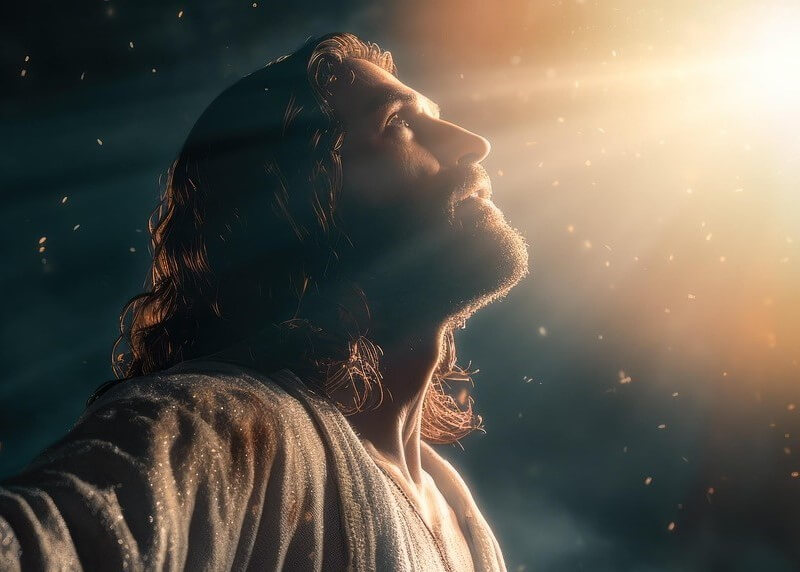
Seeing the radiant image of God in Jesus Christ
God is not a physical being, so how do we know what he is like? Is there an image that we can look at to see him? Yes, we find the true image of God in his Son Jesus Christ.
False images of God
First let’s answer this: Why does God get so angry at idolatry? It’s because an idol completely misrepresents God. The immortal and eternal God is not a physical being. He has no physical features or components. So, no physical image or form can come close to describing him.
A physical object or image cannot in any sense be a true representation of God and can’t accurately represent his grandeur, wisdom, and power. And so why did God get so angry when the Israelites worshipped idols? It’s because they had seen God’s glory firsthand and chose to revert back to worshipping physical objects and images that humans had made. Gentiles have also rejected God in this way, as Paul wrote:
Although they claimed to be wise, they became fools and exchanged the glory of the immortal God for images made to look like a mortal human being and birds and animals and reptiles. (Romans 1:22-23)
So, likening God to an idol or physical image is offensive, demeaning, and disrespectful to him. God wants people to know him and see him for who he actually is. He wants us to see his glory and worship him based on a true image of God.
Seeking God’s beauty
The Psalmist David knew that to seek the Lord was the highest and most important activity of his life:
One thing I ask from the Lord, this only do I seek: that I may dwell in the house of the Lord all the days of my life, to gaze on the beauty of the Lord and to seek him in his temple. (Psalm 27:4)
David’s knowledge of God was limited since the Messiah hadn’t been revealed yet. But David knew how precious even a glimpse of God was. And he knew that the image of God had to be beautiful, more beautiful than any earthly image.
When David sought the Lord, the image of God he looked for was his “face:”
Hear my voice when I call, Lord; be merciful to me and answer me. My heart says of you, “Seek his face!” Your face, Lord, I will seek. (Psalm 27:7-8)
In seeking God’s face, he was seeking God’s image, to know what he is like. But because God has no physical appearance, he was really looking for God’s attributes. Being in his presence, he could see him more clearly.
God’s image revealed to Moses
Although we can’t see God directly, he appeared in different forms on special occasions in Old Testament times. God’s glory was revealed to Moses, but he saw it from a partial and shaded view.
And the Lord said, “I will cause all my goodness to pass in front of you, and I will proclaim my name, the Lord, in your presence. I will have mercy on whom I will have mercy, and I will have compassion on whom I will have compassion. But,” he said, “you cannot see my face, for no one may see me and live.”
Then the Lord said, “There is a place near me where you may stand on a rock. When my glory passes by, I will put you in a cleft in the rock and cover you with my hand until I have passed by. Then I will remove my hand and you will see my back; but my face must not be seen.” Exodus 33:19-23)
God didn’t allow Moses to actually see his face directly. It would’ve been too much for him to endure—he would’ve been destroyed. As God passed by, Moses only saw his “back” (a metaphor for an indirect view of God’s glory). Afterward, Moses’ face shone from the glory he beheld:
When Moses came down from Mount Sinai with the two tablets of the covenant law in his hands, he was not aware that his face was radiant because he had spoken with the Lord. When Aaron and all the Israelites saw Moses, his face was radiant, and they were afraid to come near him. But Moses called to them; so Aaron and all the leaders of the community came back to him, and he spoke to them. (Exodus 34:29-31)
The glory that Moses experienced from being in God’s presence was overwhelming. Afterward, the people couldn’t even look at Moses directly because of the light that emanated from him.
God’s glory revealed
But the glory revealed through Moses didn’t last. It eventually faded and it affected only him and those who saw him for a short time. However, the glory revealed through Jesus Christ far surpasses the glory revealed through Moses.
Now if the ministry that brought death, which was engraved in letters on stone, came with glory, so that the Israelites could not look steadily at the face of Moses because of its glory, transitory though it was, will not the ministry of the Spirit be even more glorious? If the ministry that brought condemnation was glorious, how much more glorious is the ministry that brings righteousness! For what was glorious has no glory now in comparison with the surpassing glory. And if what was transitory came with glory, how much greater is the glory of that which lasts! (2 Corinthians 3:7-11)
Christ’s glory is much greater and permanent and brings true righteousness to those who trust him. And he continues to give light throughout all of human history and brings a true and lasting righteousness to all believers around the world.
Moses’ fading glory
The apostle Paul conducted his ministry with the complete confidence that God’s power was with him and always available for his ministry. So, he was bold and didn’t waiver in proclaiming the gospel. He had confidence in God’s Word.
Therefore, since we have such a hope, we are very bold. We are not like Moses, who would put a veil over his face to prevent the Israelites from seeing the end of what was passing away. But their minds were made dull, for to this day the same veil remains when the old covenant is read. It has not been removed, because only in Christ is it taken away. (2 Corinthians 3:12-14)
Moses put a veil over his face, at first to keep God’s glory from overwhelming the Israelites. But as time went on, the glory faded, and the veil served more to hide that fact that it was fading.
God’s image revealed in Christ
In the same way, there is a veil that hinders our view of God and his grace, mercy, and love, when we read the Mosaic Law:
Even to this day when Moses is read, a veil covers their hearts. But whenever anyone turns to the Lord, the veil is taken away. Now the Lord is the Spirit, and where the Spirit of the Lord is, there is freedom. And we all, who with unveiled faces contemplate the Lord’s glory, are being transformed into his image with ever-increasing glory, which comes from the Lord, who is the Spirit. (2 Corinthians 3:15-18)
Up to today, that veil clouds our view of God’s image when we rely on the principles of the Old Covenant of Moses. But this veil is taken away in the Lord Jesus Christ. How do we see God? By turning to Christ, because he is the unobstructed face and image of God. Now, we can see God fully and unhindered by looking at Jesus, as there is no veil over his face. Notice when we first turn to the Lord in faith, we are then transformed. God does not transform us first so that we can turn to the Lord in faith.
Moses couldn’t see God’s face without being destroyed, but we can now safely see it through Jesus Christ. Whenever anyone turns to the Lord Jesus, they can see the glory and image of God. The “Lord” Paul refers to is of course Christ, who is revealed to us through his Spirit. And the Holy Spirit is the Spirit of Christ (Philippians 1:19).
For God, who said, “Let light shine out of darkness,” made his light shine in our hearts to give us the light of the knowledge of God’s glory displayed in the face of Christ. (2 Corinthians 4:6)
The light of God’s glory shines brightly in Jesus.
Christ the true image of God
When we behold Jesus, we are looking at God. We are seeing what God is truly like.
Then Jesus cried out, “Whoever believes in me does not believe in me only, but in the one who sent me. The one who looks at me is seeing the one who sent me. (John 12:44-45)
An image is something we can see. We can’t see God, but we can see Christ who is the image of God:
The Son is the image of the invisible God… (Colossians 1:15)
A photograph is an image, but only a two-dimensional image. It represents a thing, scene, or person in only a very limited way. A statue is a three-dimensional image of a person. But it does not truly represent the person since it is only made of non-living materials. Its substance doesn’t resemble the real person in any way. But Jesus Christ is the exact image of God:
The Son is the radiance of God’s glory and the exact representation of his being… (Hebrews 1:3)
Jesus represented and continues to represent God to us in every aspect: his being, life, substance, essence, character, and eternal attributes. He is the true image of God from every angle or viewpoint.
Christ’s glory revealed to the disciples
Jesus’ closest disciples were given a privileged view of Christ’s glory when he was transfigured:
After six days Jesus took with him Peter, James and John the brother of James, and led them up a high mountain by themselves. There he was transfigured before them. His face shone like the sun, and his clothes became as white as the light. Just then there appeared before them Moses and Elijah, talking with Jesus.
Peter said to Jesus, “Lord, it is good for us to be here. If you wish, I will put up three shelters—one for you, one for Moses and one for Elijah.” While he was still speaking, a bright cloud covered them, and a voice from the cloud said, “This is my Son, whom I love; with him I am well pleased. Listen to him!” (Matthew 17:1-5)
In the same way Moses saw God’s glory on top of Mount Sinai, these three disciples had the privilege of witnessing the glory of God on top of a mountain. But this time God’s glory appeared through his Son Jesus Christ. In this scene, God confirmed to the disciples that Jesus was his true Son. He was God’s final revelation to them, overshadowing both Moses and Elijah. They were now to look to Christ, his character, life, and his saving acts. They were to listen to him as their spiritual guide, teacher, and Lord.
Jesus’ physical body is now shining brightly: like when the three disciples saw him on the mountain, or when Paul saw him on the road to Damascus and “could not see for the glory of that light” (Acts 22:11), or when John saw him and “his countenance was as the sun shining in its strength” (Revelation 1:16).
Transformed by beholding Jesus
Our goals as believers in Christ are to be in continual communion with him, to seek him, set our eyes on him, and behold the image of God in his wisdom and beauty. Jesus is also our perfect model whom we are to emulate and adore. He is our friend and daily companion—we should walk with him until he becomes our all-consuming desire.
The end result of all this seeking, communion, walking with and learning from him, is that we become like him. We are transformed into the likeness of the One we are beholding. And when Christ comes for us on the final day, we will see him clearly and we will know him as he knows us:
Dear friends, now we are children of God, and what we will be has not yet been made known. But we know that when Christ appears, we shall be like him, for we shall see him as he is. All who have this hope in him purify themselves, just as he is pure. (1 John 3:2-3)
And then we will be changed completely, and our bodies will be transformed to be like his: immortal and full of life.
Our Response
Only Jesus Christ gives us the full and accurate image of God. He is the only true representation of God. Look to him, trust in him, follow him, and submit to his will. You will then discover for yourself who God is and what he is like. You will enter into his kingdom of truth and light and then will truly know God.
Now this is eternal life: that they know you, the only true God, and Jesus Christ, whom you have sent. (John 17:3)
Christ in Scripture is listed on Feedspot Top 100 Christian Blogs.




5 thoughts on “Seeing the radiant image of God in Jesus Christ”
That’s a great point: manmade idols can never even begin to represent God in any honest manner. In our era of AI generated images, we can usually tell, quickly, that an AI image is false. It is somehow incomplete, and at times disturbing, because it is somehow “off”. To a much greater extent, nothing made by man’s very best efforts could even suggest the glory of our Father in heaven. But in Christ we have as close of an image as is humanly possible to view.
You said “when we first turn to the Lord in faith, we are then transformed. God does not transform us first so that we can turn to the Lord in faith.” Some passages support the idea we are free to make a personal choice for Christ and others don’t, such as, “No one can come to me unless the Father who sent me draws them”, John 6:44 and ” told you that no one can come to me unless the Father has enabled them”, John 6:65. How are we to resolve this? Is God – in the Bible – leaving us free to decide whatever we want about this?
Richard, Thanks for your comment and question. Your question assumes a Calvinist interpretation of John 6:44, which asserts that God unilaterally draws some people to himself by his Spirit and then “passes over” all others. But the context of John 6 is important. Jesus was describing how the Father saves those who believe in him, which the religious leaders were challenging. Read the whole discourse, especially verse 45: “Everyone who listens to the Father and learns from him comes to me.” Jesus was saying that those during his time who learned from God and listened to his voice will also believe in Jesus, the Son. Those are the ones that the Father draws. The other passages in John that seem to support the Calvinist view of election can also be explained in this way. It’s important to interpret unclear passages in light of clear passages, and the clear passages about salvation in John are those we are familiar with: John 1:12, 3:16, 6:35,40, 11:25-26, 20:31. Many other passages in the epistles confirm that faith always comes before regeneration, not the other way around. I hope this helps.
Dear Scott,
I have read many of your articles and been helped in my understanding of Scripture as a result of your ability to articulate interpretation and reveal relevance through cross referencing. This particular post has granted me greater clarification about the tremendous benefit we have in being freed from the Law of sin and death, while increasing my appreciation of knowing God through Jesus Christ our Lord.
Thank you for using the gift God gave you for the benefit of the Body.
Nichole, I’m so glad the articles are a blessing to you. It encourages me to know that people are reading them, and that they are helping people grow in their faith and love for our Lord.
Scott