

The Beauty of the Lord
When most of us think of God, we don’t normally think of beauty, but of sovereignty, power, and majesty. We mostly associate beauty with things of the earth and the heavens. But the Bible asserts that the Lord God is exceedingly beautiful, so let’s find out why.
Our longing for beauty
Beauty is something that only intelligent beings can understand and appreciate. So, when we say that something is beautiful, we mean that it’s beautiful to us humans. And humans by nature are attracted to beauty.
By nature men desire the beautiful. (St. Basil the Great, 379 A.D.)
Love beauty; it is the shadow of God on the universe. (Gabriela Mistral, 1899-1957)
Beauty lifts us above the dull and the mundane into a higher joy and awe. It elevates the human spirit. A beautiful thing is something to admire, enjoy, and praise, something transcendent. When we see beauty, it gives our soul pleasure and sometimes even hope.
It has been stated that evil and ugliness go together. It’s hard to think of evil and beauty together, although it does exist. When we see it, it’s more frightening than welcoming, and it reminds us of enticement and deception and not goodness and truth.
A God-given ability to appreciate beauty
One has to ask why God made the earth with so much beauty. At the very least, it’s because it reflects his nature. And he wanted to share his beauty with others who would appreciate it also.
The only ones who could do so are those he created in his image—creatures having intelligence, creativity, and the capacity for a sense of awe and wonder. If God made humans in his image, then appreciation of beauty is God-given.

But is there an objective component to beauty? We might not all agree on what is beautiful, but there are some things that stir even the most cynical of people to awe and wonder: the colors of a complete rainbow or a magnificent sunset, the grandeur of a distant galaxy with its spiral arms. And we all have that capacity to appreciate it, and when we do, it overwhelms us with joy. So, if God gave us this capacity, then there must be a beauty that is greater than our own thoughts and emotions that transcends human experience.
Responding to God’s beauty
Beauty takes us away from the artificial world that surrounds us. It brings us back to the real world that God created.

When we acknowledge beauty, we’re acknowledging something of greater quality and deeper meaning than just the physical components present. It’s not just the material elements of the scene that we’re praising. It’s something behind or beyond it that makes an otherwise physical scene beautiful.
Beauty draws us to think beyond this world and leads us to the transcendent. Appreciating it is an elemental form of worship, and the beginning of an acknowledgment of a Creator God.
Everybody needs beauty as well as bread, places to play in and pray in, where nature may heal and give strength to body and soul. (John Muir, 1838-1914)
We do not want merely to see beauty… we want something else which can hardly be put into words—to be united with the beauty we see, to pass into it, to receive it into ourselves, to bathe in it, to become part of it. (C.S. Lewis, Weight of Glory)
Appreciating Beauty
Those of us who are not gifted in creating beauty can at least appreciate it. In Philippians Paul tells us that we should all, among other things, think on what is lovely (Philippians 4:8). This is another way of saying we should seek out, dwell on, and spend time with what is beautiful. We need to take time to appreciate beauty in nature, in art, and in music, to pause our hectic and frantic pace and break out of the mechanistic life we have created. If we can learn to appreciate the beauty that’s before us, we can begin to enjoy life more.
God’s beauty as reflected in nature
The whole cosmos is an expression of God’s nature. He made it in a way that it would lead us to him, that we might know about him and love him. And he placed us onto a unique and special planet well-suited for life, a planet that’s diverse, colorful, and wondrous, with its marvelous landscapes and teaming life. And he gave us a central role in taking care of it all.
The apostle Paul wrote that although we can’t see God physically, we see his glory in the things he has made.
For since the creation of the world God’s invisible qualities—his eternal power and divine nature—have been clearly seen, being understood from what has been made…. (Romans 1:20)

It can’t be denied that we see incredible beauty in nature. Even many atheists who don’t acknowledge God’s existence appreciate the beauty they see in nature. The physical world we live in overflows with beauty: a peaceful mountain stream or lake nestled in a pine forest, the grandeur of a snow-capped mountain range ascending thousands of feet above, powerful and majestic monsoon storm clouds advancing over a subdued and unassuming landscape. Only a complete cynic would try to deny nature its right to impress and inspire.
“I have long been unable to understand the atheist in this world of so much beauty. And I’ve had an unholy desire to invite some atheists to a dinner and then serve the most fabulous gourmet dinner that has ever been concocted and, after dinner, ask them if they believe there was a cook.” (President Ronald Reagan, Annual National Prayer Breakfast, February 4, 1988)
Order, randomness, and beauty
But how does beauty occur? To begin, we see in the physical universe incredible uniformity and order—in the size and energy of particles that make up atoms, in the structure of atoms of each element, in the arrangement of atoms in mineral crystals, or even in the movement of planets around the sun. The countless protons inside each atom are all of the same size and energy, likewise with each electron and every other subatomic particle. These all arise from the laws of nature and the physical constants that define them. But we can’t see beauty in just uniformity and order—by themselves the universe would be very monolithic and stark.
We also see randomness—in the chaotic movement of molecules in chemical reactions, liquids, and stars, in the action of atoms upon each other in water and gas pressure, in the movement of particles of sand and soil that eventually form geologic formations, and in the light that scatters from a star across millions of miles in space. But randomness without order would be chaotic and incoherent.
However, randomness and order together result in cause and effect, variation, and objects and scenes that are beautiful.
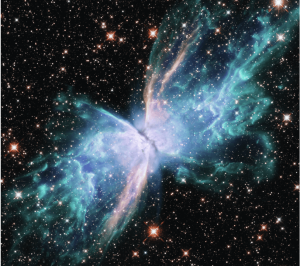
King David and the beauty of the Lord
By logic, God who is the source of all this beauty must be as beautiful or more beautiful than what he created. The Jewish King David had a heart after God, and the Psalms he wrote showed his deep love for the Lord. He understood that to be in God’s presence was to be in the presence of great and incomparable beauty:
One thing I ask of the Lord, this only do I seek: that I may dwell in the house of the Lord all the days of my life, and to gaze on the beauty of the Lord and to seek him in his temple. (Psalm 27:4)
David also confessed to God:
I have seen you in the sanctuary and beheld your power and your glory. (Psalm 63:2)
God’s beauty together with his magnificence or splendor we would call his glory. Whenever Scripture mentions God’s glory, we know that his beauty is a main part of that. The beauty of the Lord along with his magnificence is truly awe-inspiring.
Visions of God’s beauty
Those who have been privileged enough to be in the presence of God in heaven have always been at loss for words. He is not a physical being, but those who have seen a vision of him always describe him as holy, and also as beautiful. Many of their descriptions use human terms and images, but these are approximations at best and still woefully inadequate. But they always describe scenes of incredible glory and beauty.
In Revelation John was caught up into heaven and was taken before God’s throne. He described what he saw in terms of the most intense beauty in which nothing we know on earth can compare:
At once I was in the Spirit, and there before me was a throne in heaven with someone sitting on it. And the one who sat there had the appearance of jasper and ruby. A rainbow that shone like an emerald encircled the throne…… Also in front of the throne there was what looked like a sea of glass, clear as crystal. (Revelation 4:2-3,6)
John’s vision included music (Revelation 5:8-14). He saw elders, thousands upon thousands of angels, and every created creature are singing praises to the Lord. The music was loud, awesome, and undoubtedly beautiful. Human composers have since tried to envision what a heavenly chorus sounds like, and possibly they’ve succeeded.
The tapestry of God’s attributes
Beauty itself is one of God’s attributes and is imbedded in his character. Since God has no physical form, the images in John’s revelation were not meant to be a physical picture of God. These images were symbols of God’s attributes, and together they presented the vision that John beheld.
The jasper and ruby of Revelation 4 suggest God’s majesty and royalty. The rainbow reminds us of God’s promise to Noah, representing his faithfulness. The sea of glass suggests God’s purity and immutability.
What these images show is that God’s character attributes—his love, goodness, grace, mercy, justice, light, holiness, and immutability—are beautiful and awesome when viewed together. When we behold the face of God, what we see is a beautiful multicolored and seamless tapestry of his attributes.
And Christ, being the image of the invisible God (Colossians 1:15), reveals the beauty of the Lord in human form. When he walked the earth, he showed all of God’s attributes perfectly, displaying God in all his glory.
Imitating the beauty of the Lord
Being created in God’s image, we share with him the attribute of creativity. Humans have the unique ability to create beauty through art, architecture, music, and dance. Of course, nothing that humans create can compare with God himself. Our creations are just imitations of God’s unmatched beauty.
Believers throughout church history have sought to portray God’s beauty and majesty in their places of worship, especially in the Middles ages. They built these buildings to reflect God’s majesty and also to display impressive works of art and adornment. These works expressed their awe of God and also details of the gospel stories.
Music can also be an expression of the beauty of the Lord. Music composed for worship throughout church history has been unmatched in beauty and glory. But again, it is just a prelude to God’s beauty:
The books or the music in which we thought the beauty was located will betray us if we trust to them; it was not in them, it only came through them, and what came through them was longing. (C.S. Lewis, Weight of Glory)
The Person behind nature’s beauty
Going beyond just an acknowledgement of beauty, we must see there is a purpose to it and an intelligent source of it. The existence of beauty points to a Creator who made it and who allows us to see and appreciate it. When we experience beauty, we’re experiencing an aspect of God. If we see beauty in God’s creation, then we must consider the Person behind it.
And acknowledging the incredible beauty in nature can lead us into a genuine thankfulness. And we know who it is that deserves our thanks: God, our Creator.
It was God’s intent that his creatures behold and appreciate his glory, that they would have a meaningful and intimate relationship with him, one that is based in wonder, awe, thanksgiving, and ultimately love.
It would be a shame to appreciate all of nature’s beauty and then ignore the One who is the source of it. So, seek the Lord and his love today, and you will enter into his kingdom of love, truth, and beauty. Take the time to dwell on the beauty of the Lord, then let it guide you into the presence of the Creator himself.
The Mighty One, God, the Lord, speaks and summons the earth from the rising of the sun to where it sets. From Zion, perfect in beauty, God shines forth. (Psalm 50:1-2)
Christ in Scripture is listed on Feedspot Top 100 Christian Blogs.





4 thoughts on “The Beauty of the Lord”
Your words in this post resonated deeply with me, Scott. Thank you for your diligent study and faithful heart to share truths from scripture.
I’m sorry to have missed visiting with you and Nancy in October. Our orchestra concert went well that week. Hopefully, we shared the beauty Mozart intended. ☺️🎵
If we individually imagine the most beautiful thing we can conceive of, that thing derived its beauty from our Creator. In my case, I love to work with music; to arrange the music of others and, occasionally, to write songs. I find exquisite satisfaction in managing sonic tension and resolution, in a manner that is pleasing. I think that music is at its best when it is beautiful, but even less serious forms of music can employ a pleasing sense of resolution.
In my humble opinion, music is but one manifestation of God’s glory. Certainly graphic art is another, but nothing compares to the natural beauty which surrounds us. Even living in a desert climate, there is beauty, all around.
Then there is the animal realm, and the grace and beauty found in most wildlife. Behold felines, or deer, which are fairly common sights, but very beautiful creatures. Their abundance tells us of God’s generosity.
Perhaps the greatest beauty, in my eyes, is the beauty of truth and justice. What a sense we feel when truth and justice win out. Once again, the reflection of a beautiful Creator and His own justice and truth.
Mark, Thanks for taking the time to comment and blessing others with your insights. Although I wrote this article, I need to heed my own advice and enjoy God’s beauty much more than I do. Scott
S.T. Coleridge’s description of beauty – “The sense of beauty subsists in simultaneous intuition of the relation of parts, each to each, and of all to a whole.” I find this helpful.