
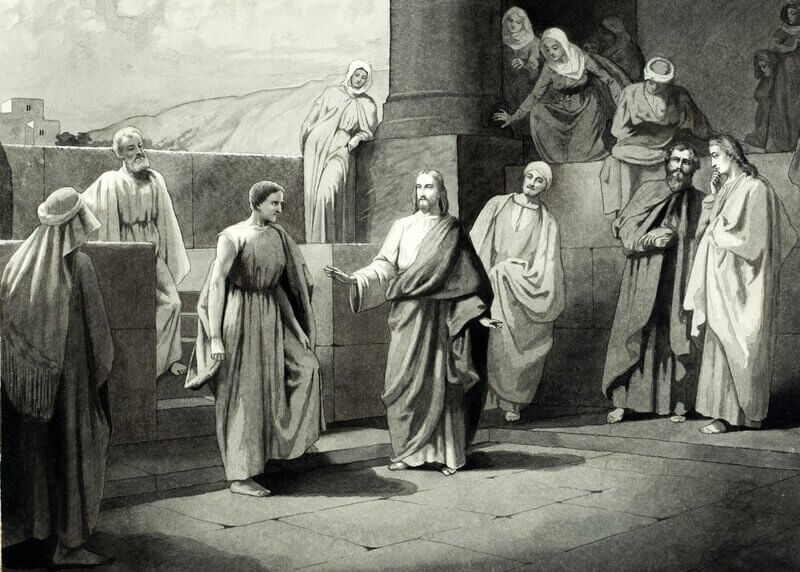
John 6: All the Father gives me will come to me
John chapter 6 records details of Jesus’ discussions with those who rejected him. But it’s one of the most disputed chapters of the New Testament. In particular the statement “All that the Father gives me will come to me” is the subject of controversy among Bible teachers. What exactly is Jesus telling us?
As always, the context of Jesus’ statements provides the right framework for how these difficult passages should be interpreted. Throughout the gospel of John, Jesus had many other discussions with those who rejected him, and these provide context for interpreting chapter 6. So, let’s first look at some of the statements John makes regarding Jesus’ accusers.
Repeating themes in the Gospel of John
One of John’s first statements recounts how the Jewish people had heard the gospel of Jesus the Messiah, but most rejected him:
He came to that which was his own, but his own did not receive him. Yet to all who did receive him, to those who believed in his name, he gave the right to become children of God… (John 1:11-12)
But anyone who did receive him would receive the promised salvation and eternal life. Later in chapter 3, John states that those whose hearts are dark will intentionally stay in the darkness and will not come to Jesus who is the light of the world:
Everyone who does evil hates the light, and will not come into the light for fear that their deeds will be exposed. But whoever lives by the truth comes into the light, so that it may be seen plainly that what they have done has been done in the sight of God. (John 3:20-21)
These themes are repeated throughout the Gospel of John.
Moses wrote of Jesus
The Pharisees and teachers of the law saw themselves as the guardians of the Mosaic law, and the gatekeepers of the truth of God. The Mosaic law was the core of their belief system. But Jesus consistently confronted them for misrepresenting the Scriptures:
“You study the Scriptures diligently because you think that in them you have eternal life. These are the very Scriptures that testify about me, yet you refuse to come to me to have life.” (John 5:39-40)
Many of the ancient Jews were waiting for their Messiah to appear and deliver them. But the Pharisees and those who followed them set their hopes solely on Moses and not the Messiah.
“But do not think I will accuse you before the Father. Your accuser is Moses, on whom your hopes are set. If you believed Moses, you would believe me, for he wrote about me. But since you do not believe what he wrote, how are you going to believe what I say?” (John 5:45–47)
Moses spoke of the Messiah who was to come, but the Pharisees ignored Moses’ teaching regarding him. After Jesus appeared, it was clear early on that they would not accept him as their Messiah but would strongly and even violently oppose him. And the common people who believed the Pharisees also followed them in their opposition of Jesus.
Jesus the true bread from heaven
John 6 begins with Jesus feeding the 5000. After he had performed this miracle, the people sought him, not because they wanted to hear his teaching, but because he had fed them bread and fish (John 6:26-27). So, in the discussion that follows, he’s speaking to an audience of rebellious people. Jesus used the opportunity to teach them about the spiritual meaning of his miracle. He began with the story of God feeding the Israelites manna in the wilderness:
“Very truly I tell you, it is not Moses who has given you the bread from heaven, but it is my Father who gives you the true bread from heaven. For the bread of God is the bread that comes down from heaven and gives life to the world.” “Sir,” they said, “always give us this bread.” Then Jesus declared, “I am the bread of life. Whoever comes to me will never go hungry, and whoever believes in me will never be thirsty.” (John 6:32-35)
The Israelites depended on the manna they ate in the wilderness. But it was God the Father, not Moses, who gave them this bread. He was their provider, not Moses.
Jesus was saying the Father now gives from heaven the true bread of eternal life to all who ask for it, to those who hear and believe the words of Christ. This is underscored by “whoever comes to me.” Anyone who comes to Jesus and believes in him will live eternally. But to live, they need to eat the bread provided by the Father, who was Christ. The Pharisees and their followers missed this symbolism because their hearts were already poisoned against Jesus.
All the Father gives me
Now in John 6 we come to a controversial passage. Jesus said to those who didn’t believe in him:
“All that the Father gives Me will come to Me, and whoever comes to me I will never drive away.” (John 6:37)
On the surface and by itself, this passage appears to be saying that God the Father chooses who will be saved. But a closer look reveals something else.
First, we just read in 6:35 that whoever comes to Christ and believes in him will live—they will never be spiritually hungry. Second, Jesus states in verse 37 that whoever comes to him he will not drive away. Both verses confirm that God will not reject anyone at any time who comes humbly in faith to him. His invitation to salvation is open to all, as John wrote in Revelation:
Whosoever will, let him take the water of life freely. (Revelation 22:17)
Finally, we note that in John 6:37 the Greek word for “gives” (δίδωσιν) is in the present active indicative tense. This means that the Father is presently giving to his Son Jesus those who are hearing the message and learning from him. So, at the time Jesus was ministering on earth, the Father was giving learners to him.
They will be taught of God
John 6:37 is explained further by verses 44-45:
No one can come to me unless the Father who sent me draws them, and I will raise them up at the last day. It is written in the Prophets: ‘They will all be taught by God.’ Everyone who has heard the Father and learned from him comes to me. (John 6:44-45)
Jesus was quoting Isaiah: “All your children shall be taught of the Lord” (Isaiah 54:13). The idea here is that since children can recognize their father’s voice, all of God’s true children will learn from him. And their hearts will be receptive to the Father’s teaching in Scripture. So, it is the Father who prepares people for the Son, and he prepares them by teaching them. In the Old Testament times this was through the law and the prophets.
Jesus was saying that those listening to the Father would also listen to the Son. In other words, those who were teachable and humbly learning from God at the time of Jesus’ appearance would quickly recognize him as the Messiah. They would come to him and believe in him.
The Father’s “drawing” in verse 44 does not mean he unilaterally and mysteriously chooses to save some people and not others. It means God woos by his Spirit those who are humble and contrite before him and who are willing to learn from him.
How the Father draws people to himself
Later in John 6, Jesus repeats the same truth, that the Father prepares those who will come to the Son:
“No one can come to Me unless it has been granted to him by My Father.” (John 6:65)
The modern reader might interpret this to mean God the Father unilaterally selects those who can believe in Jesus and then excludes all others. But this interpretation ignores the surrounding context. Granting to come is not the same as selecting. Instead, Jesus is rebuking the Jewish leaders’ unbelief because they had in their possession the Father’s teaching (the law and the prophets) but had failed to learn from it, believe it, and live by it. Those Jews who ignored the Father’s teaching stayed in unbelief, and when Jesus appeared, they naturally rejected him as well.
Although the Father does not demand or force faith, all who believe in him and learn from him will come to Jesus. Jewish believers in the Father would also believe in Jesus, and the Father then would give them to the Son. “God fearers” and “God worshippers” would come to Christ when they see him or hear about him. But those who were not listening to the Father would reject the Son also.
The Pharisees were not learning from the Father
Luke’s gospel notes that many of the common people had been baptized by John, since they recognized their need to repent and seek God. Repentance was important in preparing for the coming of the Messiah, and John the Baptist led the people to prepare their hearts for him. But the Pharisees and teachers of the law took a different path:
All the people, even the tax collectors, when they heard Jesus’ words, acknowledged that God’s way was right, because they had been baptized by John. But the Pharisees and the experts in the law rejected God’s purpose for themselves, because they had not been baptized by John. (Luke 7:29-30)
The Pharisees didn’t submit to the baptism of John the Baptist because they had not been learning from the Father. If they had, they would’ve seen their need to repent and be baptized along with the common people. Instead, their hearts had been hardened against the Father’s teaching even before Jesus appeared. They rejected God’s purpose for themselves.
Examples of those who were learning from the Father
But there were many who were sincerely seeking God and waiting for the Messiah. They were reading the scriptures and learning from the Father as they read. Because of that, God opened their hearts to accept these important truths. Examples of God-fearing Jews who accepted Christ include:
- Simeon, an elderly Jew who was “righteous and devout.” (Luke 2:25–30). He was waiting for the “consolation of Israel” (i.e. the Messiah). The Holy Spirit revealed to him that he would see the Messiah before he passed and he finally got to see him. The Spirit led him to bless the baby Jesus and his parents.
- Anna the Prophetess, a godly elderly Jewess who was waiting for the Messiah (Luke 2:36–38). She was allowed to see Jesus when Mary brought him into the temple area. The Holy Spirit led her to thank God for the baby and speak about him to others who were waiting for the Messiah.
The Father grants learners to the Son
The theme of the Father granting every seeker and learner to the Son is found throughout John. This truth was implied or stated explicitly by Jesus on various occasions:
“Moreover, the Father judges no one, but has entrusted all judgment to the Son, that all may honor the Son just as they honor the Father. Whoever does not honor the Son does not honor the Father, who sent him.” (John 5:22-23)
“My teaching is not my own. It comes from the one who sent me. Anyone who chooses to do the will of God will find out whether my teaching comes from God or whether I speak on my own.” (John 7:16-17)
“Whoever belongs to God hears what God says. The reason you do not hear is that you do not belong to God.” (John 8:47)
Jesus affirmed his inseparable relationship with the Father on many occasions:
“If God were your Father, you would love Me.” (John 8:42)
“If I glorify myself, my glory means nothing. My Father, whom you claim as your God, is the one who glorifies me.” (John 8:54)
“I and the Father are one.” (John 10:30)
“He who believes in Me, believes not in Me but in Him who sent Me.” (John 12:44-45)
“He who hates Me hates My Father also.” (John 15:23)
Affirmed in the epistles
The apostle John reaffirmed these truths in his letters to the churches:
No one who denies the Son has the Father; whoever acknowledges the Son has the Father also. (1 John 2:23)
Jesus was and is unalterably tethered to the Father—the two are inseparable. Consequently, those who believe in Jesus also belong to the Father. Throughout his teaching ministry Jesus tied himself to the Father and vice-versa. The Father has given all authority to judge to his Son; those who accept Jesus accept also the Father, but those who don’t are rejected by the Father. This was very important for Jesus to clarify this since most of the religious leaders rejected him outright.
The Gentiles being taught by the Father
Throughout the gospels, Jesus strongly rebuked unbelief in those who had an abundance of truth, such as the Pharisees. But he gave grace to those who only had general revelation or those who had only heard about him secondhand such as the Gentiles.
Although the Old Testament spoke of it many times, the acceptance of Gentiles into God’s kingdom was a great surprise to most Jews at the time. Examples of God-fearing Gentiles who accepted Jesus:
- Cornelius was a “devout and God-fearing” Gentile who was a worshipper of God. He was learning from the Father also. He was privileged to have heard the full gospel message from one of the apostles and he readily accepted Jesus once he heard it (Acts 10:1–4, 34–35). Peter concluded that “In every nation whoever fears Him and works righteousness is accepted by Him.”
- Lydia of Thyatira was a “worshipper of God” (Acts 16:14). Her heart had been prepared beforehand, and once she and her household had heard the gospel, they believed and were baptized. “The Lord opened her heart to respond to Paul’s message” (Acts 16:14), not randomly, but because she had already been learning from the Father.
Conclusion
God the Father has been preparing people for the Messiah since the promise was given to Abraham. People are prepared to come to Christ by learning from the Father in Scripture, by seeking him, and being a “God fearer.” Those who have so learned from the Father will readily accept Christ when they hear the gospel. Now that the Messiah Jesus has come, he invites everyone to hear, learn and come to him in faith. Those who believe in Christ have both the Father and the Son. Those who reject the Son reject the Father also.
I hope this answers your questions about this passage.
Christ in Scripture is listed on Feedspot Top 100 Christian Blogs.



1 thought on “John 6: All the Father gives me will come to me”
Well explained. We can choose for ourselves whether or not we want to be parts of God’s plan.