

Acts of devotion: to be seen by others or for God alone?
Giving, praying, fasting, and worship are four important elements of the believer’s devotional life. But if our motives are wrong, they can be misused. When they should be about God, we can sometimes make them about ourselves, especially if others are watching. In the Sermon on the Mount, Jesus told us to keep our acts of devotion between us and God. So how do we do that, especially in a public setting?
Acts of devotion in first century Israel
Jesus ministered to a very religious culture where public acts of worship were widely practiced: temple worship, animal sacrifices, tithes and offerings, and reading of the Mosaic law. And some of these were commonly used as a gage of spirituality. At times people displayed them just so others could see. But Jesus warned against this:
Be careful not to practice your righteousness in front of others to be seen by them. If you do, you will have no reward from your Father in heaven. (Matthew 6:1)
By righteousness Jesus meant personal acts of obedience and devotion toward God. His message was that these acts are to be done in the privacy of our hearts. He wasn’t giving a command against public worship, but against drawing attention to ourselves.
Bad examples
Many of the Pharisees performed their acts of devotion in public to be seen by others, for show and applause. They used religion to promote and glorify themselves and inflate their ego. For this Jesus rebuked them harshly:
How can you believe since you accept glory from one another but do not seek the glory that comes from the only God? (John 5:44)
They loved the praise of others over approval from God.
The hypocrite’s acts of devotion
We all have a basic need to be acknowledged, loved, and respected. But pride elevates that need to a desire for adulation and praise. We want others to see us as more than what we really are. But adoration is something that should be given only to God.
The opposite of pride is humility. Humility is living in the truth: the truth of who God is and who we are before God. People can see the outward expressions of our faith but can’t see our heart, so we can sometimes hide our motives and true nature as we worship. But God sees our heart, whether our actions are true and sincere or not.
A hypocrite is an actor, someone who puts on a show and acts in one way but is really someone else, being neither truthful nor humble. In the Sermon on the Mount, Jesus gave three examples of how hypocrites of his day practiced their acts of devotion to be seen by others: giving, praying, and fasting.
Giving
So when you give to the needy, do not announce it with trumpets, as the hypocrites do in the synagogues and on the streets, to be honored by others. Truly I tell you, they have received their reward in full. But when you give to the needy, do not let your left hand know what your right hand is doing, so that your giving may be in secret. Then your Father, who sees what is done in secret, will reward you. (Matthew 6:2-4)
God commands believers to give a portion of their earnings to God. An offering to God could be a donation given to the local church or fellowship, a missionary organization, a relief and development organization, or even a personal gift to a needy person. But Jesus’ point is that giving is to be private and not publicly displayed.
When Jesus said “Do not let your left hand know what your right hand is doing” he was using exaggeration as he frequently did. Our giving should be so secret that when we give with one hand, even our other hand shouldn’t know about it. In other words, don’t let anyone else know about it. Don’t let the public side of your life direct your private devotional life. Instead, your devotional life should inform and instruct your public life.
So, our motive for giving should be in response to the Spirit’s leading, not a sense of guilt or approval of others. Then our reward will be from God and not people. If we truly love him, we won’t need human validation or approval to serve or worship him.
God wants our giving to be from a sincere love, care, and compassion, not for recognition or applause:
- No bronze plaques dedicating the sanctuary in our name.
- No public announcements of how much money we gave to the children’s fund.
- No bragging about how much we gave to the non-profit to save the world.
Just sincere obedience to God in the privacy of our personal lives.
Praying
And when you pray, do not be like the hypocrites, for they love to pray standing in the synagogues and on the street corners to be seen by others. Truly I tell you, they have received their reward in full. But when you pray, go into your room, close the door and pray to your Father, who is unseen. Then your Father, who sees what is done in secret, will reward you. (Matthew 6:5-6)
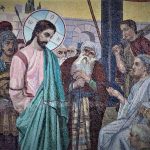
Again, Jesus is not giving a command against all public prayer. But the religious hypocrites loved to be in crowded places and pray so that others would be sure to know how righteous they were (as in the feature image).
Praying on a busy street corner today is not likely to win any praise or adulation in our modern society. But religious people today can still promote themselves within their own peer group by their overtly theological or flowery prayers. Prayer can be public as in a prayer meeting or church service but should be done in humility and reverence to God, not drawing attention to ourselves.
Only when we pray to God in private can we be sure of our motives—no one else is there to impress. We are seeking approval from him and not others. But when others are present, we need to be on our guard because there is always the possibility that we will tailor our words to impress people or seek their approval.
When only God hears, then our motive is more likely to be pure. When we close the door to meet with God, we know he is there with us as he promised to be. And we shouldn’t brag or get proud about our personal prayer time. How much time we pray in private is not a topic for boasting.
Impressing others
Our public prayers should be sincere and heartfelt coming from our love for God:
- No long flowery prayers to impress others.
- No complex prayers loaded with theological jargon.
- No meaningless perfunctory prayer just to fulfill a requirement at a public event.
- No making prayer into a speech to persuade the others present of something you feel strongly about.
But telling someone “I’m praying for you” is not hypocritical, if it’s true that we are praying for them. This can be a great blessing to those who are struggling and in need of encouragement. But if we tell someone “I’ll pray for you” but never do it, then we’re hypocrites with impure motives, saying it just to create an image.
Fasting
The purpose of fasting is to deny ourselves physical pleasure or gratification so we can better focus on God. Denying the body food or pleasure for a limited time can help us gain self-control. We’re telling our body who the boss is, as Jesus did in the wilderness (Matthew 4:1-11). Fasting is also to set aside time to pray for a serious issue we want to bring before the Father, as when Queen Esther did when going before the Persian king Ahasuerus (Esther 4:15-17).
But fasting can be misused, as Jesus warned:
When you fast, do not look somber as the hypocrites do, for they disfigure their faces to show others they are fasting. Truly I tell you, they have received their reward in full. But when you fast, put oil on your head and wash your face, so that it will not be obvious to others that you are fasting, but only to your Father, who is unseen; and your Father, who sees what is done in secret, will reward you. (Matthew 6:16-18)
Apparently, many Pharisees fasted in such a way that others knew about it. They would put on rough sackcloth, dirty their faces, and put on a scowl, all to try make themselves look pious. Jesus called them hypocrites. Their public displays were intended to be seen and praised by others, not by God.
When we fast privately, we do it for God. If only God sees, he will then reward us privately, blessing us with his presence and power. But if we display our fasting to be seen by others, then we are only seeking to impress, and our only reward will be from people, not God.
Worship
Public worship can be a great and uplifting experience, and we should make it a regular practice. Worship today is typically in a large auditorium or sanctuary with many people singing along to prepared music. This is significantly different than what was practiced in first century Judea, and this is the reason Jesus didn’t address “worship,” at least as we understand it. But the principles Jesus taught still apply to us today.
Regardless of what type of worship service we prefer and what role we play, we should worship God in the secret space of our heart. Those in music ministry are to lead others to focus their hearts on the Lord and not draw attention to themselves. When worship is pure, our heavenly Father will reward us—he will bless us with his presence and draw us closer to his heart.
But worship can obviously be misused and misdirected. Some people try to draw attention to themselves, intentionally singing much louder than everyone else or displaying their zeal so others can’t avoid seeing them. And some worship team musicians might show off their musical skills to be admired or complimented.
Again, the same principle applies: if we worship to be seen by others for their approval, then we already have our reward in full, and the Father’s blessing will not fall on us.
Let your light shine
If Jesus taught in Matthew 6 to not let our righteousness be seen by others, then why did he give the following command to his followers in Matthew 5?
In the same way, let your light shine before others, that they may see your good deeds and glorify your Father in heaven. (Matthew 5:16)
“That they may see your good deeds” seems like a contradiction to what we just read, so what’s the difference?
In Matthew 5:16, Jesus wasn’t referring to religious acts of devotion toward God but acts of mercy and compassion toward others. These acts by nature must be public to some degree: volunteering time, helping the poor, encouraging the weak, helping those in trouble, visiting those in prison.
These are actions that benefit people, and the only way they can benefit is by doing them personally and intentionally. So, to some degree they have to be done in the open. But just by doing them we’re shining God’s light on those around us—we don’t need to announce anything. In any case, Jesus’ teaching on hypocrisy still applies—we are not to do these acts for personal glory or vanity, but with a sincere desire to bless others.
The desired result of any act of mercy or kindness is that people will “glorify your Father in heaven.” The people Jesus is referring to are mostly those who are blessed by our actions—they’ll be thankful to God for the kindness shown to them and give him praise. And this pleases God. But there is always a temptation to accept credit or praise for a good deed that we do. If that happens, then we already have our reward from people, not from God.
Reward in heaven
So, acts of devotion toward God must be done unto him in the privacy of our hearts, but acts of mercy are done to bless others so they will praise God. In short, our religious devotion should be discreet and private. But our love for others should be public, generous, and widespread, to make God look good and not ourselves, so that others will praise him and not us.
This is our mandate, that in everything we do, whether praying, giving, fasting, worship, or acts of mercy, we do them unto God and for his pleasure. And what we do in secret, he will reward us. Our greatest reward will come on that final day when all his faithful servants receive their praise from God alone and not others.
Christ in Scripture is listed on Feedspot Top 100 Christian Blogs.




1 thought on “Acts of devotion: to be seen by others or for God alone?”
Always a good reminder, and especially so in our day when religious leaders and teachers can easily publish videos on platforms, such as YouTube. One example which comes to mind is a fellow who would affect an appearance designed to bring to mind first century dress, and then conduct communion using leavened bread, complete with exaggerated gestures. Conspicuous, indeed, but it struck me more as performance art than a sincere worship session. But it sure attracts views.
Instead, I hope to live up to the words of Micah 6:8 …
He has told you, mortal one, what is good; And what does the LORD require of you But to do justice, to love kindness, And to walk humbly with your God?